
The Law of Happy Endings
Absolutely any scandal can be overcome under the Law of Happy Endings.
No character—even one’s closest relation or members of the royal family—would dare stand in the way of a love match.
Every pairing will face obstacles on the road to the altar, but none should find this path prevented by the financial or social difficulties in the game.
Is your character wracked with worry over losing their inheritance and languishing penniless on the street if they marry their same-sex love interest? Their affectionate family will save them!
Was your character caught by a rival in the act of compromising their virtue? A backroom bribe or special license to be expeditiously married should conceal that quite well!
Does your character wish to marry someone of a different social class or, god forbid, illegitimate? The approval of the prince and princess should silence the rumours before they can even begin to circulate!
If every other approach to one’s happy ending fails, royal characters and NPCs reserve the right to pardon any character in order to allow their desired endings to take place, and even hand out livelihoods (like a parsonage, modest income, or land) if destitution becomes a serious concern. A royal pardon can override any scandal, as well as force the rest of society to pardon the offending behaviour as well.
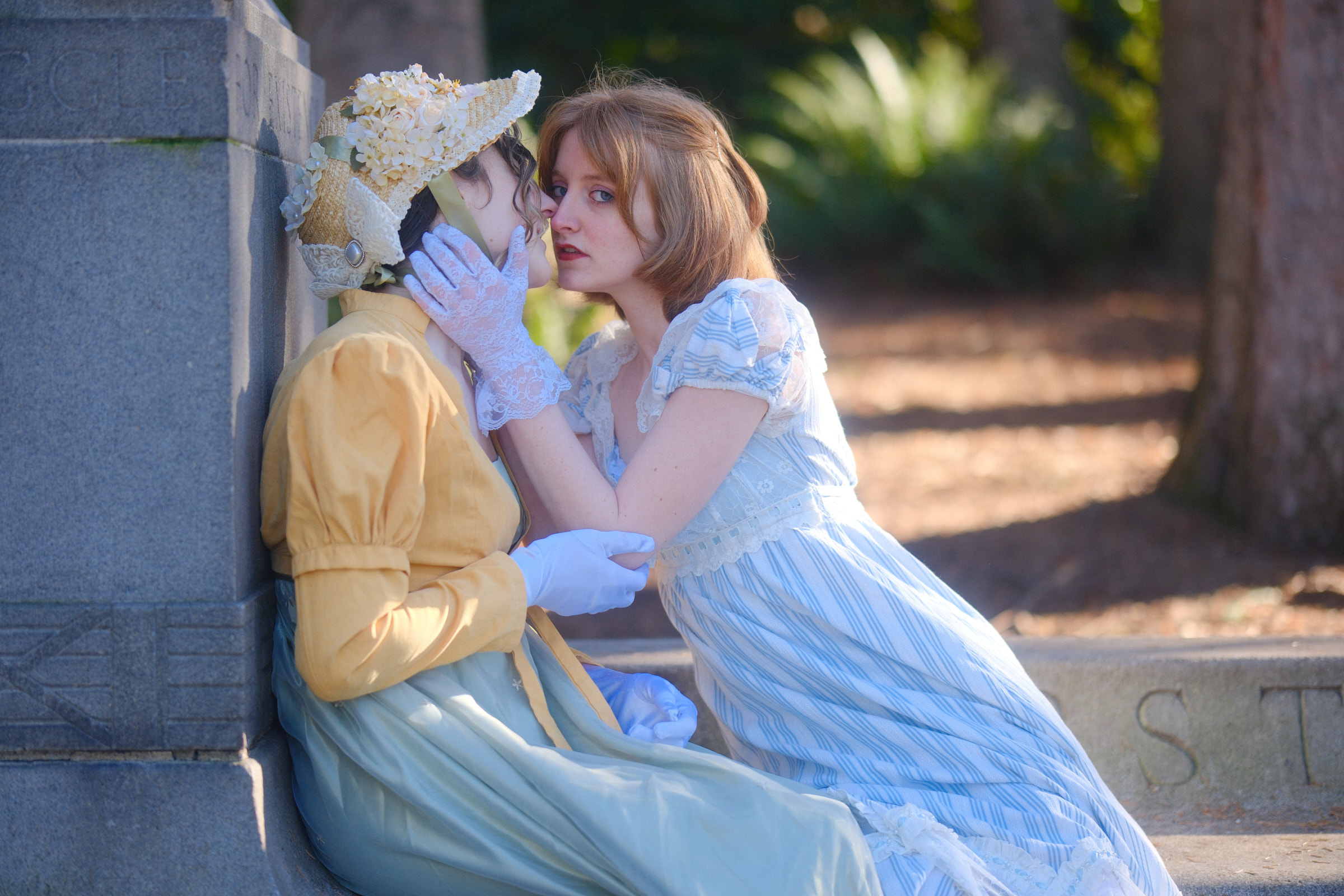
Happy Ending ≠ Perfect Ending
A “happy ending” should not be confused with a perfect ending.
For some characters, their Happily Ever After (HEA) may not be attainable without some compromise or sacrifices in fortune, situation, or connection. There are a myriad of solutions available under The Law of Happy Endings which can improve the circumstances of your character, but the rules of the game and the universe will not be magically rewritten to allow your character to hold onto their inheritance, their title, and the same-sex partner they’ve chosen to marry.
As with any larp, your character’s ending may not turn out precisely as you expected or hoped it would. We are striving to guarantee only one outcome with our design: your character’s Happily Ever After. How you obtain it and how your character feels about it is left entirely up to you.
Happy Endings, Unhappy Middles
What is a Regency game without yearning? And what is yearning without some jealousy, secrecy, and miscommunication?
With our HEA-centred design and predetermined endings, one might envision Dearest Debutante to be a light-hearted, Type 1 larp. One might even assume that romantic play and storylines should be confined to their partner. Neither could not be further from the truth.
We are aiming for “Happy Ending, Unhappy Middle” storylines, full of tension and inner turmoil. Players are encouraged to flirt, pursue, and even court characters outside of their pairing over the course of the game. Character sheets will include a section on which characters outside of your pairing might catch the interest of your character, and vice-versa.
The reason for this is to create potential for drama, misunderstandings, and heartache which will fuel play within your pairing. These subplots with other characters should not result in an engagement (unless it is one that the players involved have calibrated to break off before the end of game), but should create internal or external conflict to elevate your primary romantic plotline without true risk of complicating yours or anyone else’s Happily Ever After.
Polygamy Versus Polyamory
While polygamous outcomes are not possible in this game—since English law in our universe states that one person of any gender may only be married to one other person of any gender—polyamorous outcomes are completely acceptable.
A married couple can be of any gender and any married couple can share a future home with any married or unmarried characters, allowing for polyamorous arrangements to take place.
A polyamorous ending should be approached with great caution, agreed upon as a possible outcome in advance, and heavily calibrated before and during the game. We do not want players to feel pressured into agreeing to a polyamorous or open relationship for their characters simply because their partner desires it and it is required that their two characters end up together.